Whatever your age or ability, the Alexander Technique can help boost your performance and relieve the pain and stress caused by postural habits.
Unlike exercise or physical therapy, AT doesn't add something new — it helps you unlearn the habits that are causing your pain. The technique teaches the appropriate amount of effort for each activity, giving you more energy and less strain.
How It Works
Coordination and poise rely on the natural balance of the head, neck, and back — what F.M. Alexander called "The Primary Control." The Technique works through re-establishing this natural balance to promote easy upright posture and efficient functioning.
Most of us, after the age of 3 or 4, learn tension patterns that interfere with the natural ease we all had as children. These patterns become so habitual they feel normal — yet they limit our movements and cause pain.
The Alexander Technique offers a way to let go of destructive tension by learning to monitor how we coordinate ourselves — so we can carry out any activity with minimum strain.
Alexander Technique for Back Pain
Back pain is the single most common reason people come to see me. Most have already tried physical therapy, chiropractic, massage, or pain medication — and while those approaches may help temporarily, the pain keeps returning.
That's because most treatments address where the pain is, not why it's there. The Alexander Technique is different: it helps you identify and change the habitual movement patterns that create and sustain your pain.
This isn't a fringe idea. A landmark randomized controlled trial published in the British Medical Journal (the ATAS trial, 579 patients) found that participants who took 24 Alexander Technique lessons experienced significantly fewer days of back pain compared to those receiving standard medical care — and the benefits lasted for years.
In my own practice, I've seen people who suffered for decades find lasting relief — not because I "fixed" them, but because they learned to stop doing the things that were causing their pain in the first place. Learn more about my approach to chronic pain →
Posture Correction That Actually Lasts
If you've ever been told to "sit up straight" or "pull your shoulders back," you already know it doesn't work for long. Within minutes you're back to slouching, and now you're annoyed at yourself on top of it.
That's because forcefully holding yourself in a "correct" position is just replacing one kind of tension with another. The Alexander Technique takes the opposite approach: instead of adding effort, it helps you release the tension that's pulling you out of alignment in the first place.
As those habitual tension patterns dissolve, your posture naturally improves — without effort, without constant reminders, and without the stiffness that comes from trying to hold a position. Many of my clients describe it as feeling "taller" and "lighter" after just a few sessions.
Tech Neck & Desk Work Relief
Hours spent hunching over a laptop, craning your neck toward a screen, or tensing your shoulders while typing take a real toll. "Tech neck" — the forward-head, rounded-shoulder posture that comes from screen time — is one of the most common issues I see in my Watertown practice.
The problem isn't your desk setup (though that matters too). The problem is that your body has learned to hold tension patterns during screen work that persist even when you step away. Ergonomic adjustments help, but they can't undo the habits your nervous system has already locked in.
The Alexander Technique teaches you to notice when you're tensing up at your desk — and to release that tension in real time. My clients who work at desks often report that their neck pain, headaches, and shoulder tension diminish significantly within a few weeks of lessons.
Who Comes to See Me
Common Reasons
- Chronic back or neck pain
- Tension headaches and migraines
- Poor posture from desk work
- Performance improvement
- Breathing difficulties
- Recovery from injury
Especially Beneficial For
- Musicians, actors, and singers
- Athletes and fitness enthusiasts
- Lecturers and public speakers
- Pregnant women and new mothers
- Anyone with repetitive strain
- Parkinson's and mobility support
What to Expect
Sessions are typically 45-60 minutes. You'll remain fully clothed while I guide you through simple movements — sitting, standing, walking — using verbal cues and gentle hands-on contact.
This isn't a series of treatments or exercises, but a re-education of the mind and body. Over time, you'll develop awareness that stays with you long after our sessions end.
See It in Action
Interview with Dr. Misha Kogan
Dr. Kogan discusses why he recommends Alexander Technique — its applications, philosophy, and why it's essential for longevity.
Alexander Technique: A Short Film
Watch Anna guide clients through AT sessions — see how gentle, hands-on work creates lasting change.
Anna at Work
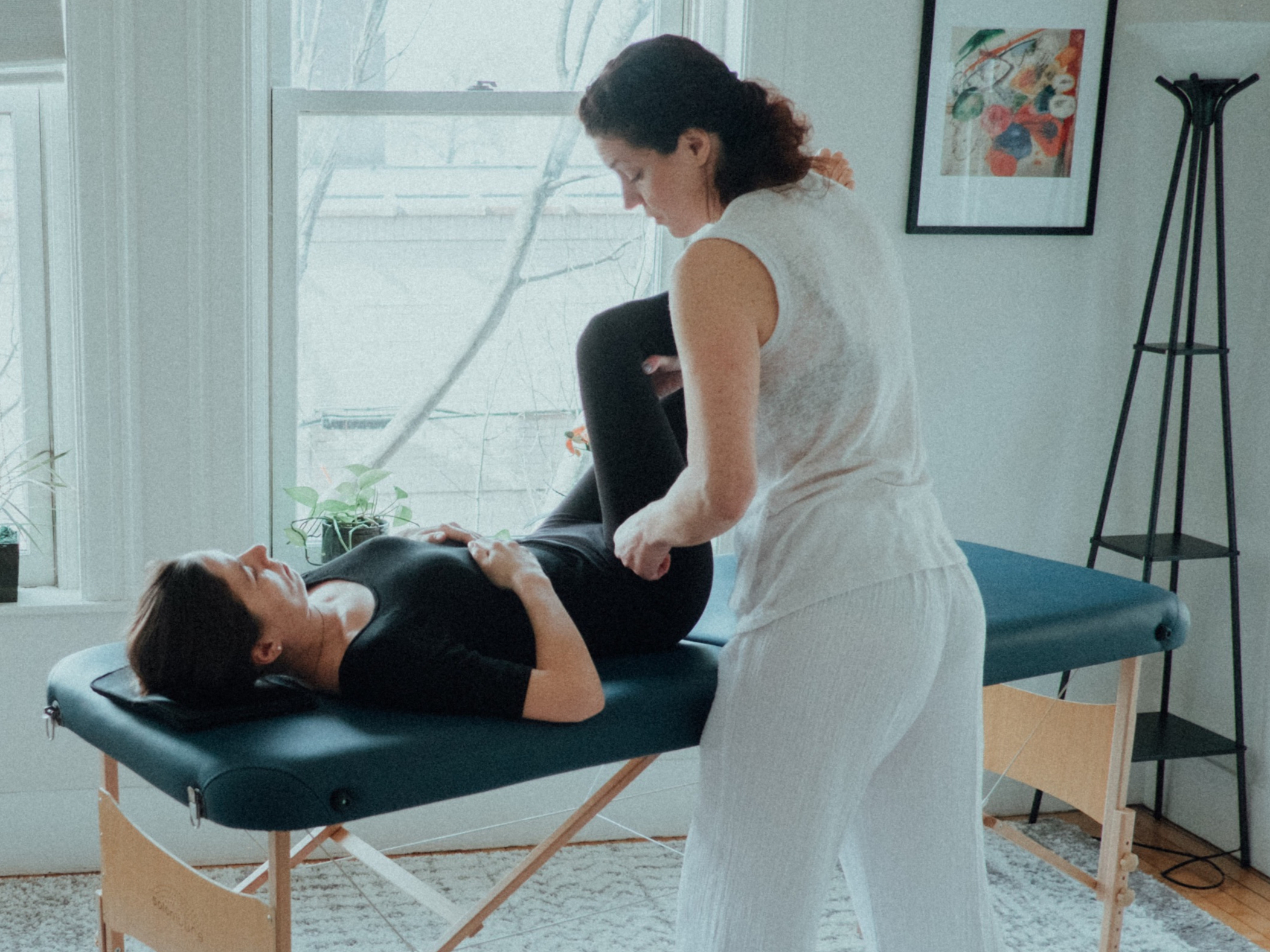 Practicing "active resting"
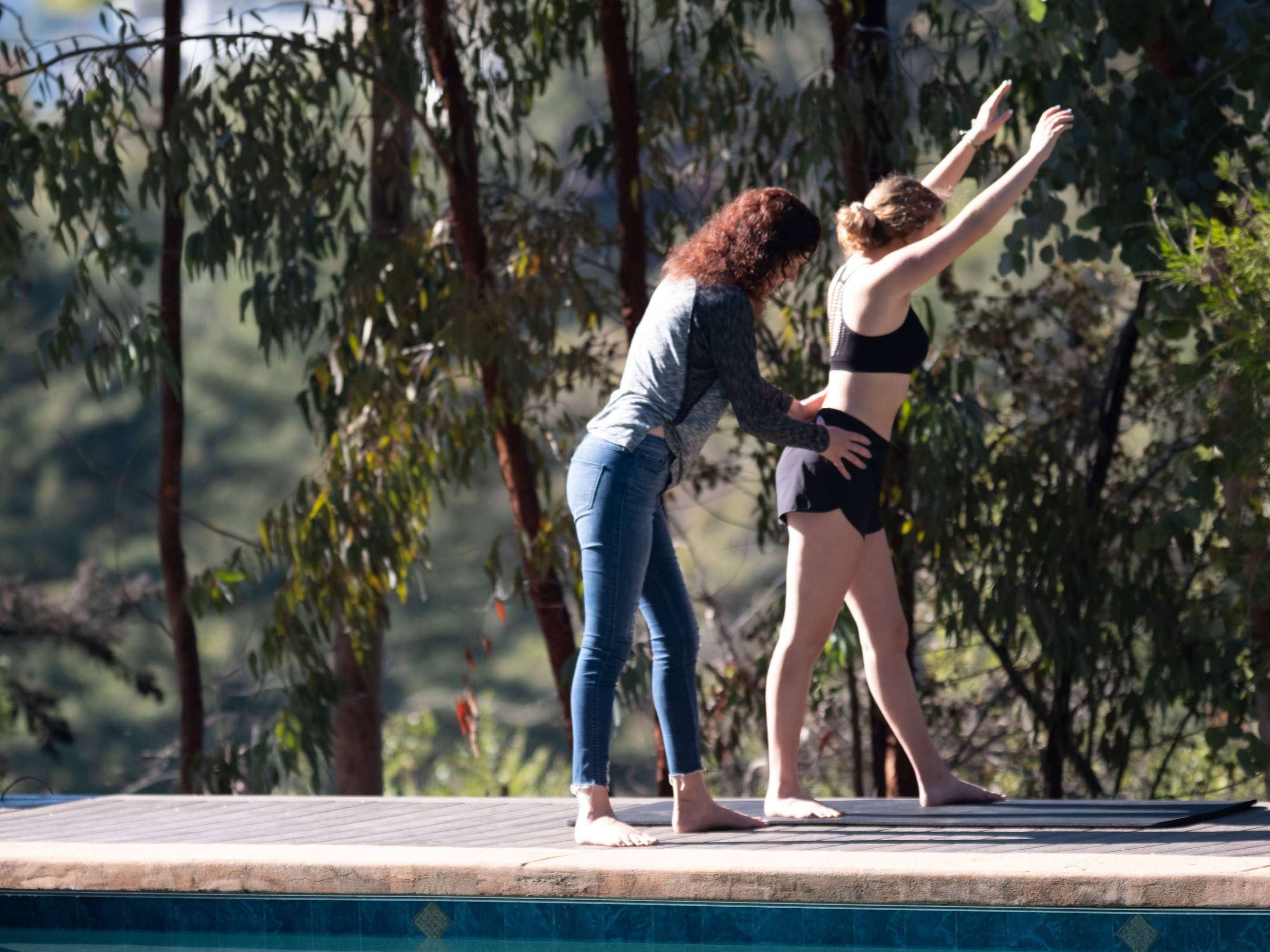 Working with athletes on balance and poise
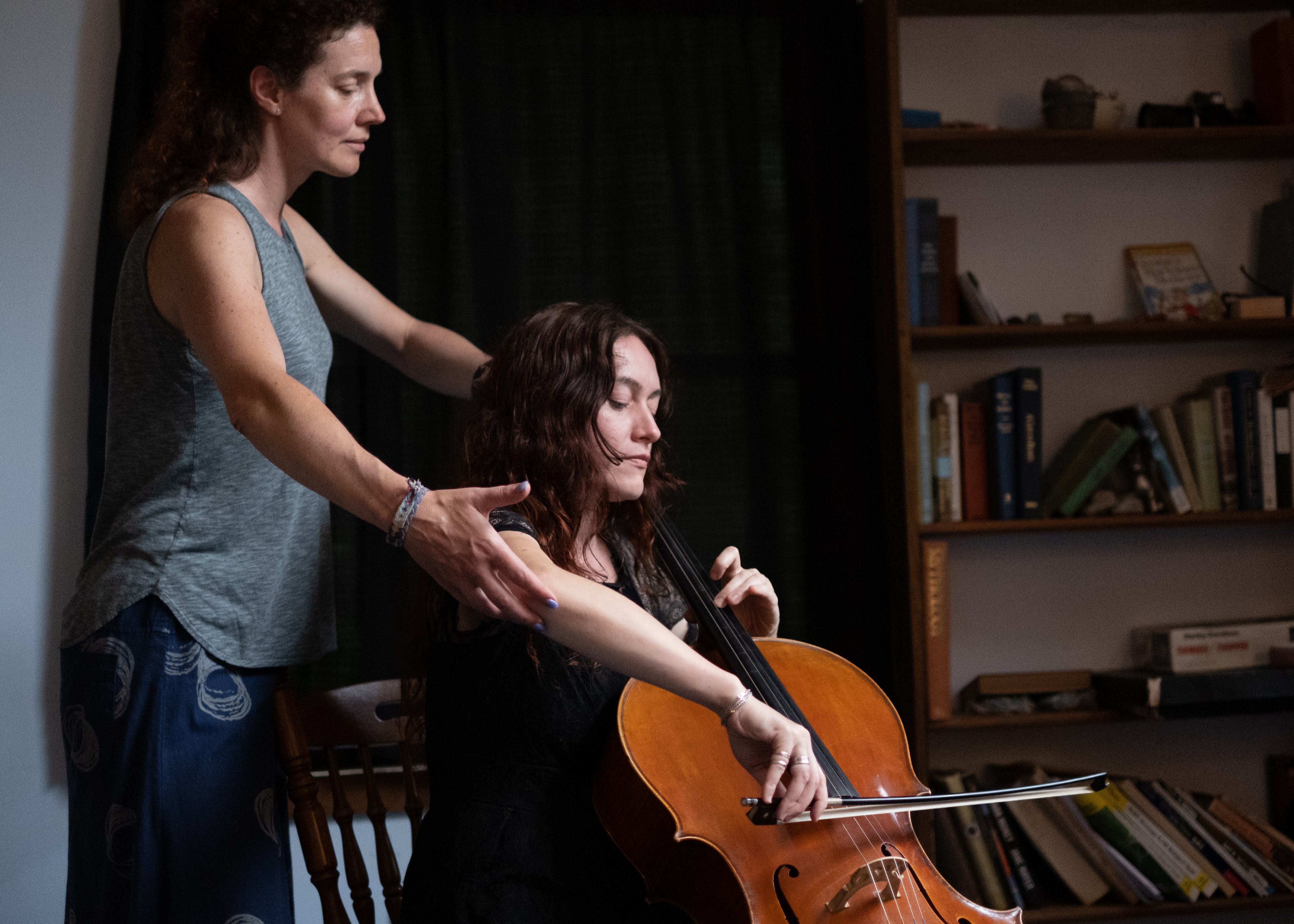 Working with musicians
 Kids are the best!
What Clients Say
"After struggling with neck and shoulder tension which would lead to headaches, working with Anna got rid of them almost entirely within just 3 months."
Singer in several choirs
"I came to AT lessons seeking help with hip pain that wouldn't go away. I'm grateful for the ability to run again and feel lighter and younger than 10 years ago."
Runner
"Anna helped me immensely. I went in intending to feel more comfortable behind the drums without realizing it would improve every motion we as humans make."
Berklee-trained Drummer
Frequently Asked Questions
Why in-person lessons make all the difference
The Alexander Technique is fundamentally a hands-on practice. In a face-to-face lesson, a teacher's gentle, skilled guidance communicates directly with your nervous system in a way that words and a screen simply cannot replicate. Through touch, your teacher can detect subtle patterns of tension, offer real-time feedback as you move, and help you experience improved coordination in the moment — often before you are even consciously aware of the change. This quality of direct, embodied learning is at the heart of what makes AT so effective, and it is best absorbed in person.
Why do you recommend in-person lessons over online sessions?
Hands-on guidance is central to the Alexander Technique. In person, your teacher can gently direct your movement verbally AND with their hands, giving your body immediate, precise feedback that no camera or verbal instruction can fully replace. Most students find they progress significantly faster — and more deeply — when lessons take place face to face.
Do you offer online lessons?
Yes — when distance or circumstance makes in-person attendance impossible, online lessons are a worthwhile option. They allow us to work together on awareness, thinking, and everyday activities through observation and verbal guidance. That said, they work best as a supplement to in-person work rather than a complete substitute.
What can a teacher's hands actually tell them?
A trained AT teacher uses their hands to sense tension, compression, and imbalance throughout your body — many of which you may not yet notice yourself. This tactile conversation allows for subtle, moment-to-moment adjustments that guide you toward freer, more coordinated movement in a way that is genuinely difficult to achieve through verbal instruction alone.
How many in-person lessons will I need before I see results?
Many students notice a difference from their very first lesson. Lasting change typically develops over a course of lessons as new habits of movement and thinking become more familiar. Your teacher will work with you to find a pace and frequency that suits your goals and schedule.
I'm not sure where to start — what do you suggest?
The best starting point is simply booking an introductory in-person lesson. You'll get a direct experience of what AT feels like, ask any questions you have, and together we can discuss what a course of lessons might look like for you specifically.
Ready to Feel the Difference?
Book a free 15-minute consultation and let's talk about what you're dealing with. No pressure, no commitment — just a conversation about how this work might help you.
Book Your Free ConsultationAdditional Resources
- The Society of Teachers of the Alexander Technique
alexandertechnique.co.uk/benefits - The American Society for the Alexander Technique
alexandertechniqueusa.org - General Alexander Technique information
www.alexandertechnique.com